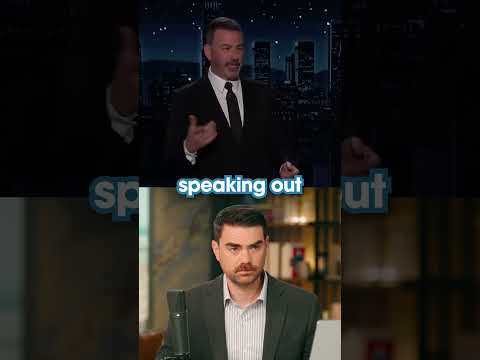
Stop Giving Your Money To Crappy People
TL;DR
- Examination of viral fundraising campaigns and questions about how donation platforms allocate resources across different causes
- Analysis of media coverage patterns and how political figures command disproportionate attention from news outlets
- Discussion of polarization and how opposing political groups find common ground through shared opposition
- Critique of social media's role in amplifying controversial incidents and crowdfunding outcomes
- Exploration of moral consistency in public discourse and donation decisions across different communities
- Commentary on the horseshoe theory of politics and how extreme positions converge despite opposing ideologies
Key Moments
Episode Recap
This episode presents a critique of contemporary crowdfunding practices and media behavior in America. The host draws attention to parallel fundraising campaigns that raised identical amounts despite originating from seemingly opposite moral positions. A woman involved in a racial incident raised $500,000 while a Black teenager accused of violence also raised $500,000, raising questions about fairness, judgment, and who controls these platforms. The episode challenges viewers to consider whether they are unknowingly supporting causes that contradict their stated values through their donation patterns. The discussion extends into media analysis, examining how President Trump continues to dominate news coverage despite efforts by media organizations to move away from covering him. The host argues that the media's obsessive focus on Trump paradoxically amplifies his influence while claiming to oppose him. This dynamic reveals what the host characterizes as fundamental dishonesty in mainstream media operations. The episode then pivots to discuss the horseshoe theory of politics, which posits that the far left and far right are closer ideologically than either side is to the center. Recent geopolitical developments serve as evidence for this theory, particularly in how America's various adversaries appear to be coordinating or at least finding mutual benefit in opposition to American interests. The host explores how enemies of the United States can unite against common interests despite their own significant differences. Throughout the episode, the underlying theme emphasizes personal responsibility in how Americans allocate their resources and attention. The host encourages listeners to examine whether their consumption patterns, donations, and media engagement align with their professed values. The episode serves as both social commentary and a call to moral consistency, suggesting that without deliberate choice, people risk funding and amplifying positions they claim to oppose. The specific examples provided are meant to illustrate broader patterns in how modern platforms enable fundraising divorced from traditional ethical gatekeeping, allowing public sentiment and virality to determine who receives financial support rather than institutional judgment.
Notable Quotes
“Stop giving your money to crappy people”
“The media claims to oppose him while making him the center of every broadcast”
“Horseshoe theory proves its reality as America's enemies unite”
“Without deliberate choice, you risk amplifying what you claim to oppose”
“Fairness and consistency in public discourse require examining your own patterns”
Products Mentioned
Media
The Daily Wire Premium Membership
Member-exclusive content and access to hit movies, documentaries, and series reshaping culture.
Visit Site →
Media
Morning Wire Video Channel
Hit podcast now available in video format with daily news and commentary.
Visit Site →
Business
Birch Gold
Precious metals investment service offering information kits for portfolio diversification.
View on Amazon →
Business
ZipRecruiter
Employment platform connecting businesses with job candidates through simplified hiring.
Visit Site →
Business
Stamps.com
Shipping and mailing solution with digital postage and scale integration for businesses.
Visit Site →
Full Transcript▼