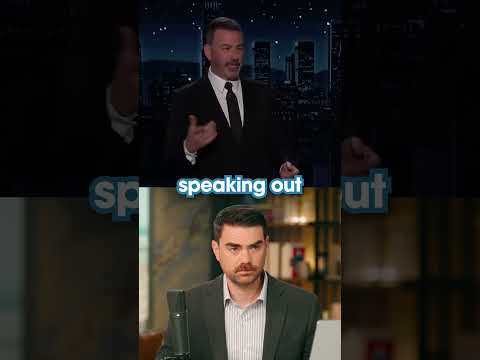
Everything You Need To Know About The Legacy Media In One Clip
TL;DR
- Examination of media bias and objectivity claims in legacy news organizations like CNN
- Discussion of Tim Walz's stolen valor controversy and its political implications
- Analysis of how Hamas influences and manipulates Biden administration foreign policy decisions
- Critique of mainstream media's role in shaping public perception of political narratives
- Commentary on the disconnect between what media outlets claim and actual editorial practices
- Exploration of how international actors exploit American political divisions and media dynamics
Key Moments
Episode Recap
This episode provides a critical examination of legacy media institutions and their claimed objectivity, using recent high-profile examples to illustrate broader patterns of bias and manipulation in contemporary news coverage. The episode opens by highlighting a telling moment where Stephen Colbert's audience erupts in laughter at the suggestion that CNN operates as an objective news organization, underscoring the widespread public skepticism toward mainstream media outlets' claims of impartiality.
The discussion then turns to Minnesota Governor Tim Walz and the stolen valor scandal that has dogged his political career. The episode examines how this controversy reflects broader questions about accountability in politics and media coverage of such scandals. Walz's inability to fully escape this narrative despite media attempts to downplay or contextualize it serves as a case study in how certain stories gain traction and resist established media narratives.
A significant portion of the episode focuses on foreign policy and national security concerns, specifically examining how Hamas has successfully manipulated and influenced Biden administration decision-making processes. This analysis explores the mechanisms through which international actors exploit American political divisions and media fragmentation to advance their own strategic interests. The episode suggests that Hamas's influence extends beyond traditional diplomatic channels, leveraging America's polarized media environment to shape policy outcomes favorable to their objectives.
Throughout the episode, the overarching theme connects these seemingly disparate stories through a common thread: the role of media institutions in either clarifying or obscuring political reality. The discussion emphasizes how legacy media outlets maintain claims of objectivity while their actual coverage reflects consistent patterns of selective reporting, narrative shaping, and political alignment. This disconnect between stated principles and actual practice has contributed to erosion of public trust in traditional news sources.
The episode also touches on broader implications of media bias for democratic processes and foreign policy outcomes. When media institutions fail to maintain genuine objectivity or clearly acknowledge their editorial positions, the public loses important tools for understanding complex issues. This gap creates opportunities for manipulation by sophisticated actors both domestically and internationally.
By connecting these three examples, the episode constructs an argument about how contemporary media dynamics affect politics, policy, and public discourse. The laughter at CNN's objectivity claim, the Walz scandal's persistence despite unfavorable coverage dynamics, and Hamas's successful influence operations all point to a system where traditional media no longer functions as the primary arbiter of truth or political legitimacy. The episode suggests that understanding these dynamics is essential for citizens seeking to navigate an increasingly complex information environment.
Notable Quotes
“Stephen Colbert's audience laughs uproariously when told that CNN is objective”
“The mainstream media claims neutrality while consistently advancing partisan narratives”
“Tim Walz cannot shake his stolen valor scandal despite media attempts to move past it”
“Hamas has successfully manipulated the Biden administration's foreign policy decisions”
“Legacy media outlets' credibility gap between stated principles and actual coverage undermines democratic discourse”
Products Mentioned
Films
Am I Racist?
Documentary film by Matt Walsh examining questions of race and racism in contemporary America, releasing September 13.
Visit Site →
Equipment
Byrna Self-Defense System
Non-lethal personal safety device offering an alternative to traditional self-defense methods.
Visit Site →
Financial Services
PolicyGenius Life Insurance
Online life insurance comparison platform helping users find affordable coverage and compare quotes.
Visit Site →