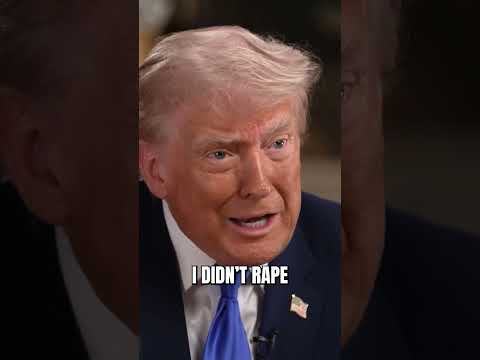
Can Trump STOP World War III?
TL;DR
- Russia, China, and Iran are escalating threats as the Trump administration formulates its foreign policy response
- President Trump shows inconsistency on tariff policy toward European allies, creating uncertainty in trade negotiations
- The Big Beautiful Bill faces significant opposition in the Senate, complicating the administration's legislative agenda
- Geopolitical tensions are at a critical juncture requiring careful diplomatic and strategic decision-making
- The Trump administration must balance multiple international crises while managing domestic political challenges
- Prevention of World War III depends on coherent strategy and clear communication with global adversaries and allies
Key Moments
Episode Recap
This episode examines the escalating geopolitical tensions facing the Trump administration as it navigates simultaneous threats from Russia, China, and Iran. The discussion centers on whether effective leadership can prevent catastrophic global conflict in an increasingly unstable international environment. Russia continues to pursue aggressive actions in its sphere of influence while China expands its military capabilities and economic coercion tactics. Iran adds another layer of complexity to the geopolitical puzzle with its own destabilizing activities. Meanwhile, the Trump administration faces critical decisions about how to respond to these multi-front challenges while maintaining alliances with traditional partners like Europe. A major point of contention involves the administration's tariff policy toward Europe. President Trump has expressed conflicting positions on whether to impose significant tariffs on European goods and services. This vacillation creates uncertainty among allies about the administration's true intentions and whether Europe will be treated as a partner or subjected to economic punishment. Clarity and consistency in trade policy are essential for maintaining the coalition needed to counter authoritarian powers. Domestically, the administration is pushing the Big Beautiful Bill through Congress, but it faces substantial opposition in the Senate. This legislation appears to be central to the administration's agenda, yet the legislative landscape presents significant obstacles. Senate dynamics could require compromises that weaken key provisions or delay implementation. The episode explores how domestic political gridlock might hamper the administration's ability to respond effectively to international crises. The central question posed is whether the Trump administration can develop and execute a coherent strategy to prevent wider conflict. This requires clear communication with adversaries to establish red lines and consequences, reassurance of allies about commitment to their security, and strategic military positioning that deters aggression without triggering escalation. The discussion acknowledges the complexity of managing multiple crisis points simultaneously while dealing with economic pressures, domestic politics, and questions about leadership consistency.
Notable Quotes
“Can Trump stop World War III before it starts?”
“The administration must balance economic policy with security concerns”
“Consistency in messaging is critical when dealing with nuclear powers”
“Senate dysfunction could undermine foreign policy execution”
“Clear red lines and consequences are essential for deterrence”
Products Mentioned
technology
Perplexity AI
An AI-powered answer engine that searches the internet to deliver fast, unbiased, high-quality answers with sources and citations.
Visit Site →
health
Helix Sleep
A sleep technology company offering customized mattresses and sleep solutions designed for optimal rest.
Visit Site →
business
Birch Gold
A precious metals investment company offering guidance on gold and other precious metal investments.
View on Amazon →
business
ZipRecruiter
A job search and recruitment platform connecting employers with qualified candidates.
Visit Site →