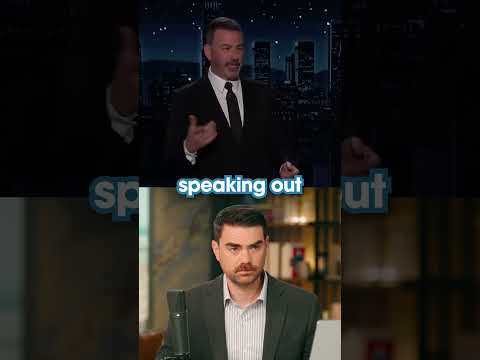
It is not a 'human right' to demand everyone to reject reality.
TL;DR
- Shapiro argues that demanding others reject objective reality is fundamentally unreasonable and not a legitimate human right
- The episode examines how ideological movements sometimes require adherents to deny observable facts and empirical evidence
- Discussion of the philosophical and practical problems that arise when societies prioritize ideology over reality
- Shapiro explores how this disconnect between ideology and reality affects public policy and cultural institutions
- The importance of maintaining rational discourse and evidence-based reasoning in a functioning society
- Critique of how certain activist movements frame reality-denial as a moral imperative rather than acknowledging factual disagreement
Key Moments
0:00
Introduction and thesis on reality versus ideology
8:30
Defining the difference between opinion and reality denial
18:45
How ideological movements enforce reality rejection
32:15
Consequences of reality denial for public policy and institutions
46:00
Why shared reality is essential for democratic discourse
Episode Recap
In this solo episode, Ben Shapiro tackles a fundamental issue in contemporary political and cultural discourse: the demand that people reject observable reality in service of ideological commitments. Shapiro argues that while individuals certainly have the right to their own opinions, they do not have the right to demand that others deny facts or reject reality itself. This distinction forms the core of his argument throughout the episode.
Shapiro explores how certain modern movements have increasingly framed reality denial as not just acceptable but as a moral imperative. He examines specific examples where ideological positions require adherents to reject empirical evidence or observable facts. According to Shapiro, this represents a dangerous departure from rational discourse and evidence-based reasoning that has traditionally anchored productive debate in democratic societies.
The episode delves into the philosophical problems created when societies begin to prioritize ideological conformity over factual accuracy. Shapiro discusses how this affects everything from public policy decisions to the functioning of cultural institutions. When institutions begin enforcing reality denial rather than pursuing truth, the consequences ripple through society in significant ways.
Shapiro also examines the practical implications of this phenomenon. When large portions of the population are encouraged or coerced into denying observable reality, the baseline for productive conversation collapses. Democratic discourse depends on participants operating from a shared understanding of basic facts, even when they disagree about how to address those facts.
The host distinguishes between legitimate disagreement about interpretation, values, and policy responses versus demands to deny reality itself. He argues that the former is healthy debate while the latter is antithetical to functioning society. This distinction is crucial for understanding why some conflicts in contemporary culture feel particularly intractable.
Shapiro addresses how activist movements often frame this issue, suggesting that acknowledging certain facts is somehow oppressive or bigoted. He argues that reality itself is not bigoted, and that conflating disagreement about facts with moral failing creates impossible situations where honest discourse becomes equated with hatred.
Throughout the episode, Shapiro emphasizes that protecting genuine human rights requires maintaining society's commitment to reality and truth. He contends that you cannot build a just society on a foundation of shared delusion. The episode serves as a commentary on broader cultural trends that he sees as fundamentally incompatible with maintaining a functional, rational public square.
Notable Quotes
“You have the right to your own opinion, but you do not have the right to demand that others reject observable reality.”
“When we prioritize ideology over truth, we abandon the foundation necessary for a functioning society.”
“Democratic discourse collapses the moment participants are no longer operating from a shared understanding of basic facts.”
“Reality itself is not bigoted, and conflating disagreement about facts with moral failing creates impossible situations.”
“You cannot build a just society on a foundation of shared delusion.”